 YonixHub
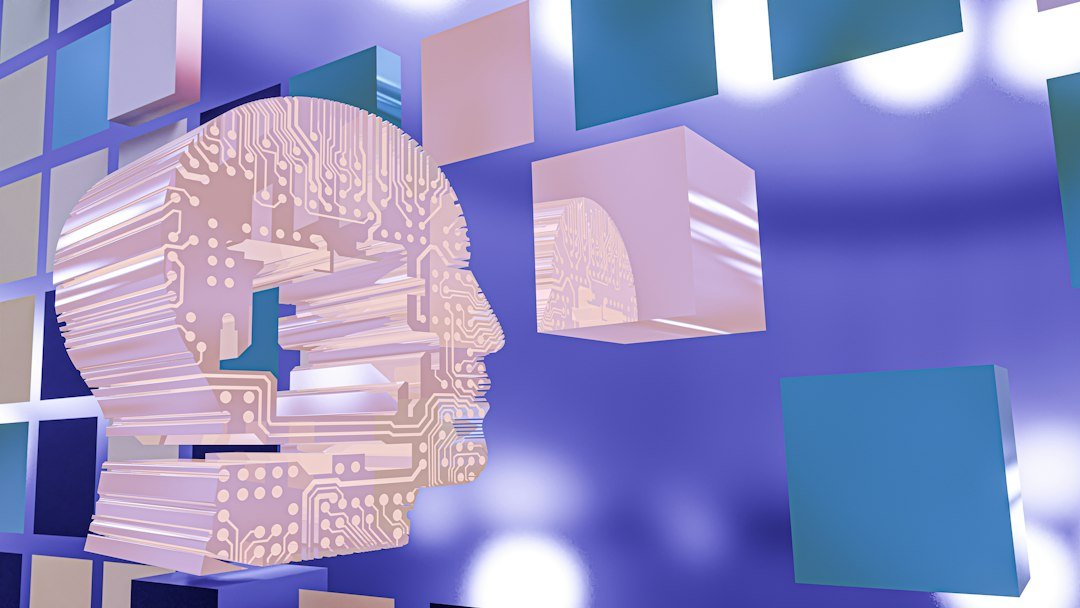
In a remarkable twist, both artificial intelligence and a human mathematician have recently claimed solutions to the 167-year-old Riemann Hypothesis, a problem that has bewildered mathematicians since its inception in 1859. This hypothesis, which concerns the distribution of prime numbers, is not only fundamental to mathematics but also has profound implications in fields such as cryptography.
Why This Matters
The Riemann Hypothesis posits a deep connection between the distribution of prime numbers and the zeros of the Riemann zeta function. Given that prime numbers are the building blocks of arithmetic, any breakthrough here could redefine our understanding of number theory and potentially unlock new methods for cryptography, which underpins much of our digital security. With AI now entering the equation, we are on the verge of a paradigm shift in mathematical problem-solving.
What To Do About It
- Stay informed about developments in AI-driven mathematics, as they may reshape traditional methods.
- Consider studying number theory or related fields to better understand the implications of these findings.
- Follow reputable mathematical journals and news outlets for updates on peer reviews and validations of these claims.
- Engage with mathematical communities online to discuss and debate these advancements.
Risks and Opportunities
- The risk of over-reliance on AI could lead to a devaluation of traditional mathematical skills.
- There may be opportunities for new fields of study as AI-generated solutions challenge existing paradigms.
- Collaboration between AI and human mathematicians could lead to breakthroughs not previously imaginable.
- However, skepticism remains high; both solutions require rigorous validation before they can be accepted.
"The intersection of AI and mathematics is just beginning; this could open doors to discoveries we haven’t even contemplated yet," said Dr. Amelia Hargrove, a leading mathematician at the Institute of Advanced Studies.
Frequently Asked Questions
What is the Riemann Hypothesis?
The Riemann Hypothesis is a conjecture about the distribution of prime numbers, stating that all non-trivial zeros of the Riemann zeta function have a real part of 1/2.
How does AI contribute to solving mathematical problems?
AI can process vast amounts of data and identify patterns far quicker than humans, allowing it to explore solutions to complex mathematical problems like the Riemann Hypothesis.
What are the implications if the Riemann Hypothesis is proven true?
If proven true, it would revolutionize number theory and have far-reaching implications for cryptography, finance, and computer science, affecting everything from online security to data encryption.
As we witness this extraordinary interplay between human intellect and artificial intelligence, the mathematical landscape is poised for revolutionary changes. This dual claim on the Riemann Hypothesis illustrates not just the potential of AI, but also the enduring ingenuity of human problem-solving.